American roots
American composer, born in Philadelphia (1958); lives and works in New York. Raised in a musical but not classical household, she was fascinated from childhood by folk traditions and American ‘working songs’.
Bang on a can
Co-founder and artistic director of Bang on a Can, together with David Lang and Michael Gordon.
Pulitzer Prize
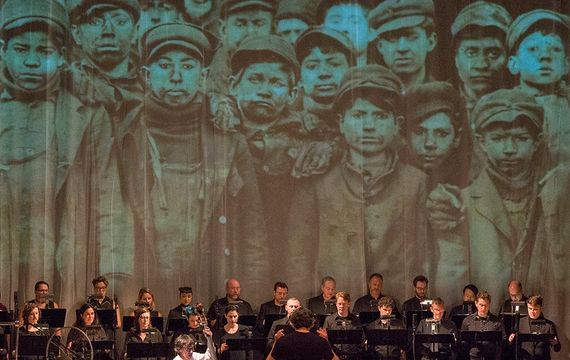
Winner of the 2015 Pulitzer Prize for Music for Anthracite Fields, her monumental work on the history of American miners.
Don't judge a book by its colour
She studied with, among others, the Dutch composer Louis Andriessen, who once remarked that although she may appear calm and courteous, her music is ‘the sharpest and most aggressive’ of them all.
'athletic music'
Her scores are often physically demanding: she pushes performers to the limits of endurance, works frequently with extreme tempi, and describes some passages as ‘athletic music’.
Critical lens
She is known for her strong social engagement, creating large-scale works on labour, women’s rights, migration and historical narratives (Anthracite Fields, Her Story, Steel Hammer, Fire in my mouth, …).
Fun fact
For Fire in my mouth, Wolfe searched the Garment District for the perfectly sounding pair of scissors. The women’s chorus uses them in performance both as props and as percussion instruments, while the orchestra evokes the sounds of sewing machines and fire through extended techniques.